Waterfront
What should I ask before buying a small oceanfront cabin on Salt Spring?
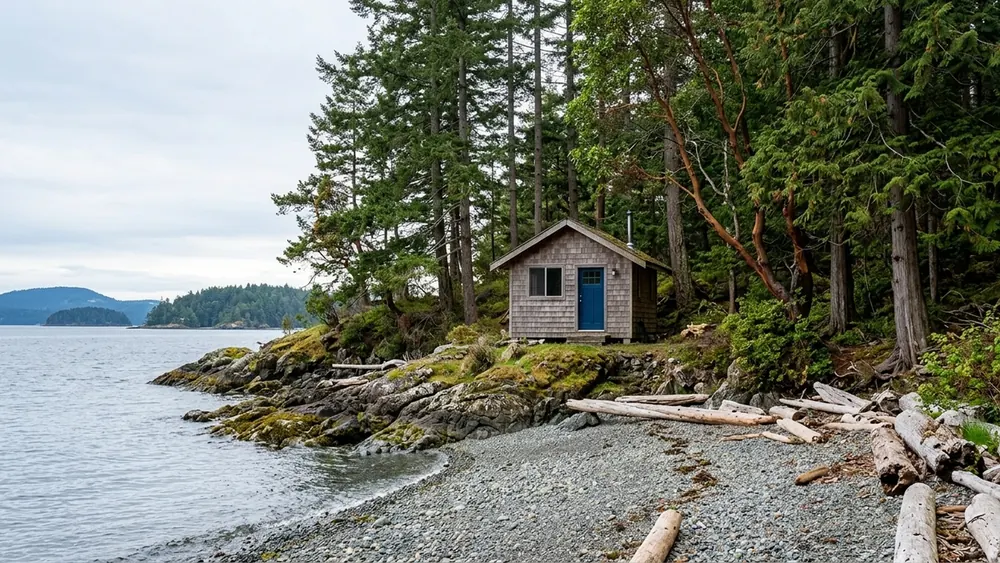
Ask how the cabin is built, heated and serviced, how you reach it and the shore, and which shoreline questions need a qualified professional. Then confirm what the paperwork covers before the view decides for you.
On this page
Start with the cabin, not the view
Before buying a small oceanfront cabin on Salt Spring, ask four sets of questions: how the cabin is built and maintained, how it gets water, power and heat, how you reach it and the shoreline, and what the paperwork actually covers. Each set has its own professional who gives the real answer. Your job is to collect the questions and make sure each one lands with the right person.
Small cabins on the water are easy to fall for. The view does a lot of the selling, and a compact building can look simple. But a cabin close to the shore still needs everything a larger home needs: a water source, a way to handle waste, heat for the colder months and reliable access in all weather. Those practical questions, more than the view, decide whether the cabin really fits your life.
It also helps to decide early how you plan to use the place. A summer retreat, a year-round home and a future build site each lead to different questions. Being clear about that before you visit makes every conversation with an inspector, a lawyer or the responsible local authority more focused and more useful, and it keeps you from paying for answers you do not need.
How a small cabin is built and maintained
Start with the structure itself. Ask the seller what they know about when the cabin was built, what has been updated and what has been left alone. Ask for any records of repairs or upgrades. A home inspector, ideally a licensed home inspector, is the person who tells you what condition the building is really in, including the roof, foundation, windows and any signs of moisture.
Cabins near the water often sit where wind and weather hit hard. Ask the inspector how that exposure has affected the exterior and what kind of ongoing care the building is likely to need. You are not looking for a perfect cabin. You are looking for an honest picture of the work involved, so you can decide whether it suits your time and budget.
Also ask whether the cabin was ever added to, moved or converted from another use, such as a studio or a seasonal shelter. That history matters, and it is not something to assume. The responsible local authority and your lawyer or notary can help you understand what the records show and whether any questions remain open before you commit. Write down what you learn so you can compare it with the seller’s disclosure.
Water, waste, power and heat questions
Every cabin needs a water source, and on Salt Spring that source can vary from one property to the next. Ask what the water source is, whether there are any records about it, and who has looked at it recently. Qualified water and well professionals are the people who can tell you what you are actually getting. Do not rely on a general description from anyone else.
The same goes for waste. Ask how the cabin handles septic, whether there are records, and whether it has been inspected recently. Qualified septic professionals answer these questions, and the responsible local authority can tell you what records it holds. A small cabin with a system that does not fit your plans can change the whole picture, especially if you hope to stay longer or host guests.
Then ask about power and heat. How is the cabin heated through the winter, and what does that mean for daily life? Is there a backup if the power goes out during a storm? These are practical questions about comfort and routine, and a home inspector can tell you what is in place and what condition it is in.
Getting to the cabin and to the shore
Access is easy to overlook on a sunny visit. A cabin that feels charming in summer can be harder to reach on a wet, dark evening in winter. Walk the route yourself, ideally more than once and at different times of day, and think about carrying groceries, firewood or luggage along it. Here are the access questions worth writing down before you go further.
- How the driveway or path handles rain, slope and the darker months
- Whether the route to the cabin crosses land or easements you do not own
- How you would reach the shore, and who can speak to any stairs or paths
- How the drive to Ganges and your ferry fits into an ordinary week
A surveyor and your lawyer or notary can help confirm boundaries and any shared access, which matters when a path crosses a neighbour’s land. The ferry operator is the only source for schedules, which change, so check them yourself rather than relying on what a seller or neighbour remembers. Then picture your own comings and goings, and whether a cabin at the water’s edge still feels easy on a busy week.
Who answers each cabin question
It helps to see the questions laid out next to the people who answer them. Use this table as a checklist when you are looking at a small oceanfront cabin on Salt Spring, and add your own questions as they come up. The goal is that nothing important gets answered by guesswork, a seller’s memory or a neighbour’s opinion, however well meant it may be.
| Question | Why it matters | Who to ask |
|---|---|---|
| What condition is the cabin in? | Shows the work and care ahead | A licensed home inspector |
| What is the water source? | Daily living depends on it | Qualified water and well professionals |
| How is waste handled? | Shapes how the cabin can be used | Qualified septic professionals and the responsible local authority |
| What can happen near the shore? | Shoreline rules change and vary by property | Qualified shoreline professionals and the responsible local authority |
| Where are the boundaries and access? | Avoids surprises about what you own | A surveyor and a lawyer or notary |
Insurance is its own question for any property near the water. Ask an insurance agent early, before you are deep into an offer, so you understand what coverage looks like for that specific cabin and whether anything about it raises questions. Financing questions go to a lender or mortgage professional, who can tell you how a small or seasonal building may be viewed and what they will need from you.
Shoreline structures and the paperwork
If the cabin has stairs, a path, a deck or any structure near the shore, do not assume it can stay, be repaired or be replaced as it is. Ask the seller what they know, then take the question to qualified shoreline professionals and the responsible local authority. Rules change, and what applies to one property may not apply to the next.
Your lawyer or notary can explain what the title and documents cover, and your brokerage can explain the disclosure the seller provides. Read that disclosure carefully and write down anything you do not understand or that does not match what you saw. A small cabin can carry questions that are just as important as those on a large waterfront home, so give it the same care.
What to gather before you book a viewing
Before you go see a small oceanfront cabin, write down how you plan to use it and when, and what would make it feel like the right place rather than just a pretty one. Then gather a short list so you are ready to move from looking to asking. Here is a simple starting point you can add to as your search takes shape.
- How often you plan to stay, and whether it will be a year-round home
- A lender or mortgage professional to confirm what financing looks like for you
- A licensed home inspector and water and septic professionals you can call
- An insurance agent and a lawyer or notary for the shoreline and paperwork
Erin chooses to work only on Salt Spring, and recent work on the island has included oceanfront and ocean view property. If a small cabin on the water keeps pulling at you, bring your list and talk it through before the view makes the decision. What would you want to know first about the cabin you keep looking at?
This article is general information about buying and selling property on Salt Spring Island, British Columbia. It is not legal, tax, lending, investment, valuation or inspection advice and does not predict prices or promise results. Confirm water, septic, land use and building questions with inspectors and the responsible local authority, shoreline questions with qualified professionals, ferry details with the ferry operator, title and disclosure with a lawyer or notary, tax with an accountant, and financing with a lender. Erin Williams, eXp Realty.

Written by