Rural Acreage
How much land is too much to look after on Salt Spring Island?
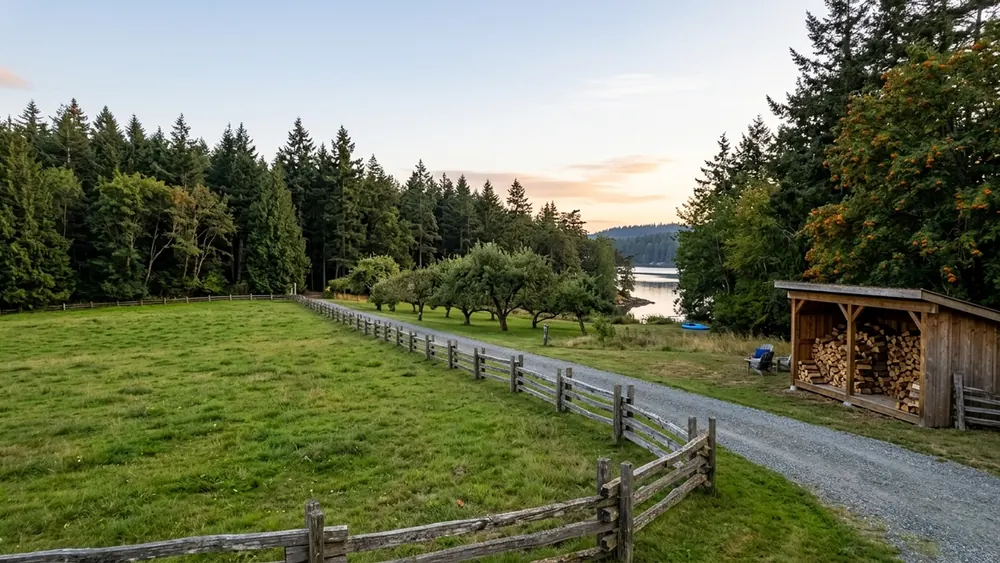
Land becomes too much on Salt Spring Island when the upkeep it needs is more than the time, energy and help you actually want to give it. Picture a normal month of mowing, clearing, firewood, fencing and driveways, then decide honestly.
On this page
When land becomes more than you want
Land becomes too much when the work it asks for is more than the time, energy and help you want to give it. There is no single size that crosses the line. A small lot with steep slopes, heavy trees and a long driveway can ask more of you than a larger, open property. The real question is not how much land a home sits on, but how much looking after that land will need from you.
The simplest way to answer it is to picture a normal month. Think about mowing, clearing brush, cutting and stacking firewood, mending fences, keeping a driveway passable and looking after outbuildings. Then ask whether you want that work, want some of it, or would rather have very little. People who enjoy being outside often welcome the chores. Others discover after the move that the land runs their weekends.
This matters more on Salt Spring than in many places because rural living is a big part of what draws people here. It is easy to fall for a property with room to roam and forget that every part of it needs attention. Sorting out your honest answer first lets you compare an acreage home and a smaller property on the points that will shape your daily life.
What a typical month of upkeep involves
Start with the ground itself. Open grass needs mowing through the growing season. Treed areas drop branches and need clearing, especially around buildings and along driveways. Gardens, orchards and hedges ask for regular time. None of this is unusual, but it adds up, and on a larger property it rarely happens in a single afternoon. Write down which of these jobs you would do yourself and which you would hire out.
Then look at what is built on the land. Fences, gates, sheds, barns, workshops and a long driveway all need checking and repair over time. A gravel driveway that seems charming in summer may ask for attention after a wet winter. A licensed home inspector can look at buildings, and qualified professionals can speak to the systems that serve them. The aim is to know what you are taking on before you commit.
Rural systems belong in the picture too. Many island properties rely on a well and a septic system, and each needs its own care and occasional professional attention. Do not assume a system is in good order because the home looks well kept. Ask what records exist and take the questions to qualified water, well and septic professionals. Their answers help you understand the ongoing side of owning that property, not just the purchase.
How island life shapes the upkeep question
On an island, help is not always a phone call away. Trades, landscapers and equipment have their own schedules, and the people you would hire are often busy with other properties. That is not a reason to avoid land. It is a reason to ask early who you would call for each job and how they usually work, so you are not counting on help that is hard to arrange when you need it.
Distance matters as well. A property closer to Ganges may put supplies, hardware and services within easier reach, while a place further out, around the North End or toward Fulford Harbour, may mean more planning for each trip. Neither is right in general. It depends on how often you want to go into the village and how much you enjoy the drive. Add your usual ferry terminal to the picture too.
Then there is how you plan to live here. A full-time resident can tend land a little every week. Someone who splits time between Salt Spring and another place may come back to an overgrown garden and a list of repairs. If you expect to be away often, ask yourself who would watch the property and handle the routine work while you are gone, and whether you would be comfortable with that arrangement.
Questions to ask about any property
When you look at a rural property, it helps to ask the same questions every time. That way you compare homes on upkeep rather than on first impressions. These are not questions with a right answer. They are questions that show how much work a property would ask of you, and whether that work fits the life you want on the island.
- Ask which parts of the land the current owner actually maintains each year
- Ask what outbuildings, fencing and driveways exist and what condition they are in
- Ask what records the seller has for the well, septic and past repairs
- Ask who the seller has relied on for clearing, repairs and seasonal work
Write the answers on a simple sheet for each property. When you go back over them later, you will see quickly which homes match the amount of work you want and which would slowly take over your time. Erin can help you gather what the seller can provide and organize your questions, while inspectors and other professionals give the official view on condition.
Comparing acreage with a smaller property
Not every island buyer wants acreage, and that is a perfectly reasonable choice. A townhome near Ganges or a smaller rural property can offer island life with far less to manage. A larger acreage can offer space, privacy and room for projects. The table below sets out some of the questions that help you compare the two on the points that matter to you, along with who confirms each one.
| Question | Why it matters | Who to ask |
|---|---|---|
| How much land do I want to maintain myself? | Upkeep shapes your weekends and seasons | You, using your own picture of a normal month |
| What condition are the buildings and fences in? | Repairs add work and cost after you move in | A licensed home inspector |
| What do the well and septic need over time? | Rural systems need ongoing care and attention | Qualified water, well and septic professionals |
| What does a strata maintain for a townhome? | Fees and rules change what you look after | The strata, through current strata documents |
| How does financing differ for acreage? | Rural properties can raise different lending questions | A lender or mortgage professional |
Use the table as a starting point, not a verdict. Your own answers to the first row will shape everything else. If you find you want space but not a heavy workload, there may be properties in between, with a manageable piece of land and fewer buildings. Comparing specific homes against your list is the clearest way to find where your comfort level sits.
Assumptions that catch acreage buyers out
One common assumption is that more land always means more freedom. Sometimes it does, and sometimes it means more obligations than a buyer expected. Another is that land can simply be left alone. Grass grows, trees drop branches, and driveways wear. A property that looked effortless during a summer viewing may ask far more of you in the wet months, so think about the whole year, not one visit.
A third assumption is that you will find time later. Life on Salt Spring has plenty to fill a week, from the market to time on the water and visits from friends. If the land needs more than you want to give, it can start to feel like a second job. Being honest now is kinder to your future self than hoping the work will somehow feel lighter once you move in.
Your next step before you start looking
Before your first viewing, take some time to write down how you want to spend your weeks on the island. That picture will tell you more about the right amount of land than any listing description. Then put a few practical notes beside it. Here is a short list worth bringing to a first conversation about rural property.
- How many hours a week you would happily spend on outdoor work
- Which jobs you would do yourself and which you would hire out
- How often you expect to be away from the island
- Whether you want to be close to Ganges or further out
With those notes in hand, the search gets simpler, because you know what you are looking for. Erin has lived on Salt Spring for more than a quarter century and can help you compare acreage homes and smaller properties on upkeep and daily life, then point you to the professionals who confirm the details. How much of your week do you actually want to spend looking after land?
This article is general information about buying and selling property on Salt Spring Island, British Columbia. It is not legal, tax, lending, investment, valuation or inspection advice and does not predict prices or promise results. Confirm water, septic, land use and building questions with inspectors and the responsible local authority, shoreline questions with qualified professionals, ferry details with the ferry operator, title and disclosure with a lawyer or notary, tax with an accountant, and financing with a lender. Erin Williams, eXp Realty.

Written by